Tuesday, September 11, 2012

Some Abbreviations which are not known to many of us...


World's 1st laptop

World's 1st laptop Released in 1981 by the Osborne Computer Corporation, the Osborne 1 is considered to be the first true portable computer.

World's First Motorcycle.

This one's really a collection piece. The First Motorcycle was created in 1885 in Stuttgart, Germany. It was designed and built by the German inventors Gottlieb Daimler and Wilhelm Maybach. The invention was also the first petroleum-powered vehicle.

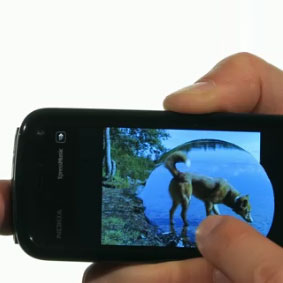
3D Nokia Photo Browser s60v5 app

Amazing gallery interface. Just like apple iphone. You can zoom picture with a click of your finger, change picture like water flow, rotate vertical to horizontal view with your eccelerometer sensor and many more.


                                                     Download now


Automatic Message Hider s60v5 app

What Is The Future of Mobile Commerce?

The proliferation of mobile devices globally has changed the way consumers shop, both offline and online. No longer are brick-and-mortar shops the first point of contact in a shopper’s purchase cycle. They’re increasingly using mobile sites and dedicated apps to make better, more informed purchases. So the question remains – how can publishers and app developers capitalize on this opportunity?

One thing is for certain; in-app purchases can be a developer’s proven route to monetization. According to Business Insider’s Analysis of App Store Data, 93 percent of the top 100 grossing iPhone apps use in-app commerce. Of those 100 grossing apps, two-thirds are free-to-download apps. High-level or power users of apps are typically the ones making the majority of in-app purchases. And the more frequently and consistently these power users interact with an app (upwards of 10 app sessions), the more likely they are to make an in-app purchase. Take for example the largest Internet retailer, Amazon. It recently added in-app purchases as part of its larger mobile advertising strategy. This new feature will use Amazon’s one-click purchasing, letting consumers buy an item without having to exit the application they’re using. Keen to deliver more content for its Kindle Fire tablet (and compete with Apple’s iPad), each movie and book download made within the app will help Amazon make substantial revenue gains.

Another example of the monetization potential of in-app purchases is the Magic Piano by Smule app. It was first developed specifically for iPads as a pay-to-download app that costs $2.99. Months later, the iOS developer released a version for the iPhone, which was free-to-download and offered a few songs at the start. To ensure the app delivered consistent streams of mobile revenue, the iOS developer released additional songs every Wednesday from popular artists like Lady Gaga, Jason Mraz and Britney Spears – available as an in-app purchase using a special type of currency called Smoola. These Smoolas are sold in packs of 160, starting at $1.99, and tracks cost anywhere between 25 and 75 Smoolas each. We’ve already seen these types of in-app purchases prove to be huge revenue drivers for game makers like Zynga. Clearly, there is a very compelling business case for why more app developers should leverage in-app purchases to earn revenue from consumers.

Did you know that one in six Smartphone users in Europe access online retail sites and apps on their mobile devices? To top it off, one in eight Smartphone users in the EU5 countries actually completed a retail transaction on their phones, according to comScore. As recently as a few months ago, British supermarket chain Sainsbury’s put its mobile commerce strategy into motion with the launch of a mobile-optimized site that lets shoppers choose from over 200,000 grocery items to purchase using their phones. The newly launched mobile site was designed with a very specific goal in mind – to make customers’ lives easier and deliver a rich, useful shopping experience no matter where customers are when they decide to do grocery shopping. Given Forrester Research’s European Mobile Commerce Forecast, citing that mobile spending across Europe will grow to a whopping €19.2 billion (or 6.8% of online sales) in 2017, the potential to generate revenue from mobile site purchases is one that publishers cannot afford to ignore.

Clearly, the remarkable growth of apps and mobile sites has generated a number of different revenue models for publishers and app developers. But should we be worried that the success of gaming apps like Words With Friends and Draw Something (thanks to in-app purchases) is fleeting? What types of innovation are needed for publishers to monetize traffic on their mobile sites?

Sunday, September 9, 2012

Interesting Facts About Pakistan

Pakistan (officially known as the Islamic Republic of Pakistan) is a country in South Asia. Here are some interesting facts about Pakistan that you probably don’t know!

Interesting Facts About Pakistan

  • Pakistan has the second largest Muslim population in the world. It is second to Indonesia.
  • About one fifth of the population live below the international poverty line (US$1.25 per day).
  • More than 60 languages are spoken in Pakistan. English is the official language of Pakistan and is used in government.
  • 96% of the population are Muslims. Just over 1.5% are Christians.
  • Pakistan has the sixth largest military force in the world.
  • Pakistan have cold, dry winters and hot, wet summers.
  • Despite once being called the world’s most dangerous country in a British magazine (The Economist), the tourism industry is growing in Pakistan.
  • The official and national sport of Pakistan is field hockey. Cricket, however, is the most popular sport. The national side won the ICC World Cup in 1992.
  • Pakistan qualified for the Golf World Cup for the first time in 2009.
  • One goal of the current government is to see the literacy rate reach at least 85% over the next few years.
  • About 1.7 million refugees from Afghanistan live in Pakistan.
  • Pakistan became an Islamic republic in 1956.
  • In 1971, there was a civil war in East Pakistan that led to the creation of Bangladesh.

Twitter Delicious Facebook Digg Stumbleupon Favorites More

 
Powered by Blogger